Locks almost never fail without warning. They complain first — quietly, in the language of friction and slop — and the homeowners who learn that language replace a lock on a Tuesday afternoon instead of meeting us at midnight. Here are the seven complaints that matter.
1. The key needs a jiggle, a lift, or a prayer
A healthy lock accepts its key smoothly and turns with fingertip pressure. When you develop a technique — push in, pull out a hair, lift while turning — the pins, the key, or both are worn. Try a fresh key first: keys wear faster than locks, and a replacement cut to factory code (not copied from your worn key) restores many locks. If the new key struggles too, the cylinder is telling you its remaining life is short.
2. The bolt does not throw fully
A deadbolt should extend its full inch with a decisive clunk. A bolt that stops short, grinds, or needs the door pulled hard toward you to seat is leaving your door protected by a fraction of its bolt — or by nothing but the latch. Causes range from a shifted strike to a warped door to a dying bolt mechanism; all are fixable, but a half-thrown bolt is the single most dangerous item on this list because the door looks locked.
3. The key turns but nothing happens — or spins freely
That disconnected feeling means the tailpiece or internal linkage has broken or slipped. The lock has already failed; it just has not locked you out yet. It will choose its moment. Replace the cylinder or lock now, on your schedule.
4. Rust, corrosion or a green tinge at the keyway
Exterior locks live hard lives. Surface rust on the finish is cosmetic; corrosion reaching the keyway and plug means moisture is inside the mechanism, springs are weakening, and pins will start sticking in earnest. Coastal and humid-climate doors show this years earlier — a reason our technicians check the "fine" back door as carefully as the front.
5. The whole lock is loose in the door
Wiggle is wear: mounting screws loosening, a worn rose, a door bore enlarged by years of torque. Tightening screws buys time, but a lock body that moves under hand pressure is also easier to attack and harder on its own internals. Re-seat or replace before the movement becomes slop you can see from across the porch.
6. It has been picked, drilled or forced — or nearly
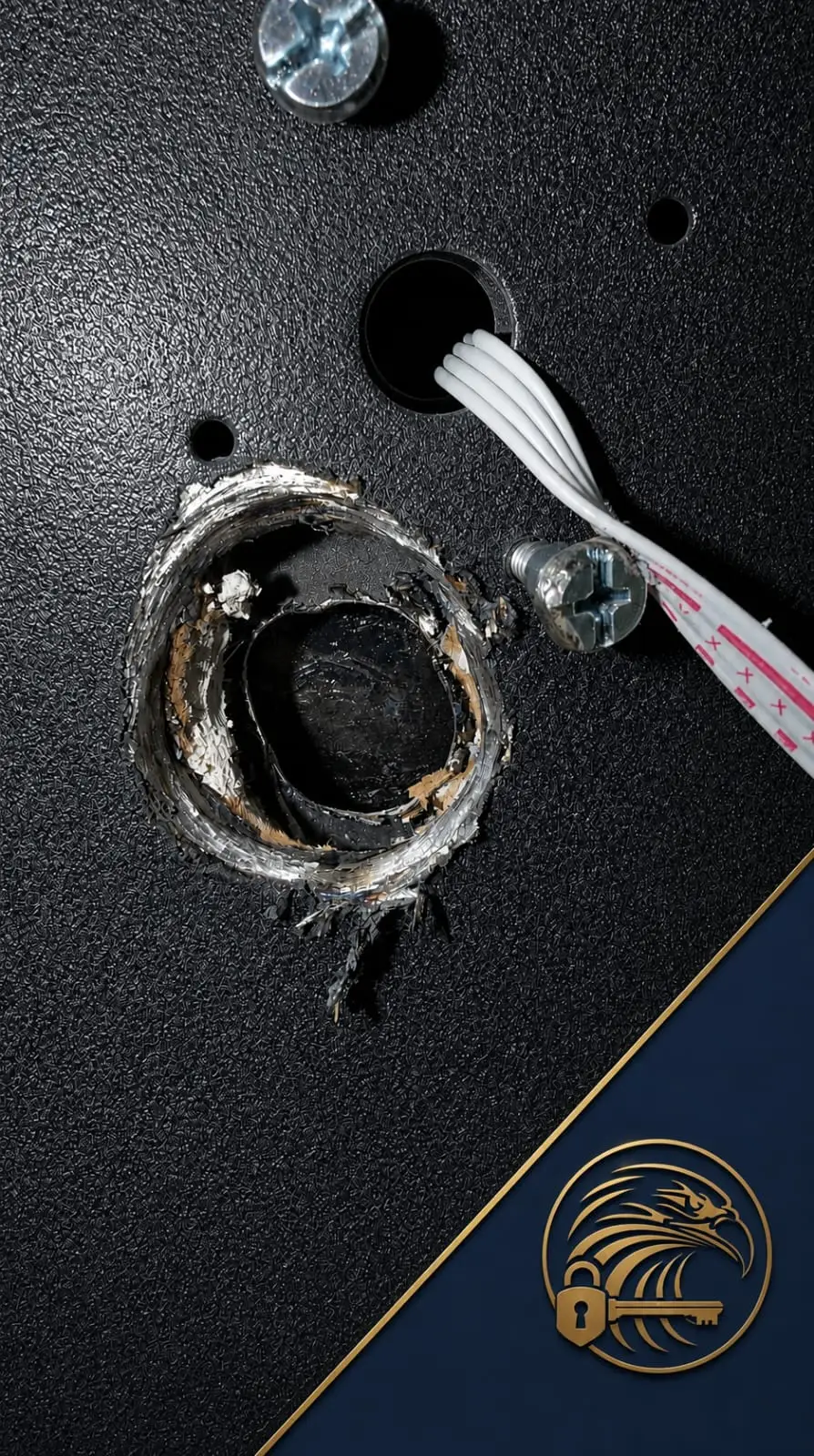
After any break-in attempt, successful or not, the lock is evidence and a liability: cylinders that have met a drill or a pry bar do not return to trustworthy. Replace it, upgrade the grade while you are at it, and run the rest of the checks in our post-break-in checklist.
7. It is simply old — and unknown
A lock of unknown age, from an unknown maker, with keys of unknown circulation, on the home you just bought or the office you just leased, is a replacement (or at minimum a rekey) by definition. Age alone weakens springs and wears pins; unknown provenance is a security gap all by itself.
One sign is a maintenance call. Two or more on the same door is a replacement conversation — bring the list to a residential visit and we will grade each door honestly, including the ones that are fine.
The five-minute lock checkup
Once a year — daylight saving weekend works — walk your doors with this list. One: every exterior bolt throws fully and smoothly, with the door pulled closed the way it naturally rests, not hauled into place. Two: every key inserts and turns without technique — no jiggling rituals. Three: strike screws get a screwdriver test; if the plate wiggles, longer screws or a reinforced strike go on the list. Four: look at the keyway and bolt for rust bloom or green corrosion. Five: check that the door itself has not sagged — an uneven gap along the top, wider at one end, means the hinges and frame are moving the lock out of its strike a fraction at a time. Anything that fails twice, or fails after adjustment, graduates from checkup item to service call.