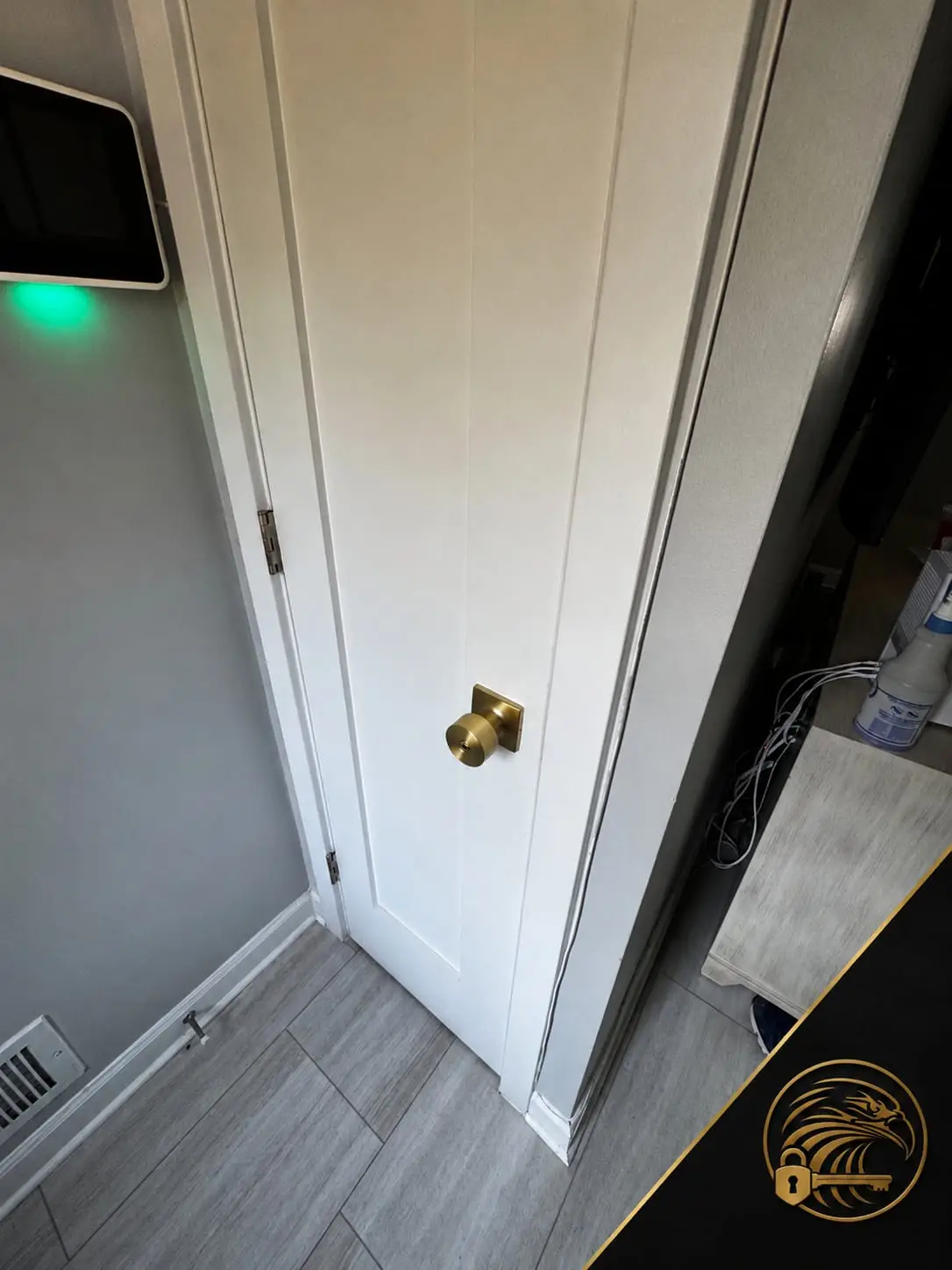
The first question every homeowner should ask: who else has a key?
When you buy a house, the honest answer is: nobody knows. The previous owners, their adult children, the cleaning service from three years ago, the contractor who had a copy made "temporarily" — standard keys can be duplicated at any kiosk in minutes, with no record and no permission needed. That is why the single most valuable residential service we offer is also one of the simplest: rekeying or replacing the locks on day one in a new home. Our move-in lock guide walks through the full first-week checklist. The same logic applies after a roommate moves out, a relationship ends, or a key is lost with anything that identifies your address attached to it.
Rekeying vs. changing locks — the honest difference
These two services get confused constantly, and the difference matters to your wallet. Rekeying keeps your existing lock hardware and changes the pins inside the cylinder so the old key stops working and a new key takes over. It is fast, it is the cheaper option per door, and it completely solves the "who else has a key" problem — as long as the lock itself is sound. Changing the lock replaces the hardware entirely, which is the right call when the lock is worn, damaged, a cheap builder-grade unit you never liked, or when you want a genuine upgrade: a higher security grade, a different finish, or a keypad instead of a key. Our article rekey vs. change locks compares costs, timing and security in plain terms so you can decide before anyone quotes you.
Deadbolts: the lock that does the real work
The knob lock on a typical front door is a latch — convenient, and nearly useless against force. The deadbolt is what actually holds the door. A proper residential setup is a quality single-cylinder deadbolt with a one-inch throw, a reinforced strike plate anchored into the wall stud with three-inch screws, and a door and frame in good enough condition to deserve it. We install, replace and upgrade deadbolts every day, and we will tell you plainly when your existing bolt is fine and the strike plate is the weak point instead. For the details on grades and what the ratings mean, read our deadbolt grades guide.
Everyday residential work we handle
Beyond the security projects, residential locksmiths keep houses working: locks that stick or need the key jiggled just so (usually a worn cylinder or a door that has shifted in its frame); keys that broke in the lock; sliding-door and patio locks that stopped latching; mailbox, gate and garage-entry locks; window locks for ground-floor security; and lockouts at every hour — for those, our emergency locksmith team answers 24/7. We also fit and service smart locks and keypads when you want keyless entry without giving up a real mechanical backup.
Locks for the way houses actually get used
Good residential security fits the household. Kids who walk home from school need a way in that cannot be lost on the bus — a keypad code beats a key under the mat every time. A home with carers, cleaners or regular guests benefits from temporary codes or a dedicated keyed-alike side door rather than copies of the master key floating around. Landlords between tenancies need fast, documented rekeying. Multigenerational homes often need lever handles and easy-turn hardware. Tell us how the house runs and we will spec the locks to match, instead of selling you the same package we sold the last address.
What a residential visit looks like
We look at every exterior door, not just the one you called about, because security fails at the door nobody checks — the back door with the worn latch, the garage entry with the original builder lock. You get a straight assessment: which locks are sound, which are worth rekeying, which should be replaced and why, with prices per door before we touch anything. Rekeying a typical home takes under an hour; full lock changes run a few hours depending on count. Every key is tested in its lock, in front of you, before we leave.
Landlords, second homes and houses in transition
Some homes change hands — or occupants — constantly, and they need a different lock strategy. Rental properties should be rekeyed between every tenancy as a matter of policy and, in some jurisdictions, of law; keeping a log of each rekey protects the landlord as much as the tenant. Homes being sold benefit from a rekey the day of closing, before the first box crosses the threshold. Vacation and second homes argue for keypad entry, so access can be granted and revoked without a key ever traveling. And for estates and properties in probate, securing the locks early protects the property while paperwork catches up. Tell us the situation and we will match the service to it instead of defaulting to the standard package.